3 Days in Sevilla: The Perfect Itinerary by a Local Food Guide
A complete 3-day itinerary for Sevilla written by a local food and wine guide. Monuments, neighborhoods, tapas bars, flamenco, sherry, and the best way to enjoy the city without wasting time in the wrong places.

Three days in Sevilla is the sweet spot. It is enough time to see the great monuments, eat properly, wander through neighborhoods that don’t always make it onto the postcard, and still leave space for slow lunches, long walks, and those little unplanned moments that often become the best part of the trip.
I was born and raised in Sevilla, and this is the itinerary I would give a friend visiting the city for the first time. It includes the big names, of course, but also the rhythm I think you need to really enjoy the city: monuments in the morning, proper food, a slower afternoon, and evenings built around tapas, wine, sherry, and conversation.
Quick Overview
| Day | Morning | Afternoon | Evening |
|---|---|---|---|
| Day 1 | Cathedral, Giralda and Real Alcázar | Santa Cruz and the historic centre | Sevilla Tapas Tour |
| Day 2 | Plaza de España and María Luisa Park | Triana neighborhood | Riverside walk and local dinner |
| Day 3 | Las Setas and Alameda | Casa de Pilatos or Bellas Artes Museum | Sherry tasting and flamenco |
This itinerary works in any season, but adjust your pace. In summer, do monuments early and rest during the hottest hours of the afternoon. In winter, Sevilla is mild, walkable, and honestly underrated.
Day 1: The Historic Heart of Sevilla
Morning: The Cathedral and the Giralda
Start early, ideally before 10 a.m. The Cathedral of Sevilla is the largest Gothic cathedral in the world and one of the city’s essential visits. Inside, everything is on a huge scale: the nave, the chapels, the choir, and the Capilla Mayor with its incredible gilded altarpiece.
You should also climb the Giralda. Before it became the cathedral’s bell tower, it was the minaret of the old Almohad mosque that stood here. The climb is easier than most people expect because it is mostly ramps, not stairs. And the view from the top is one of the best panoramas of central Sevilla.
Elio’s Tip: Buy your tickets online in advance and choose one of the earliest slots. The Cathedral is absolutely worth visiting, but waiting in line under the Sevilla sun is not a spiritual experience I recommend.
Late Morning: Coffee and a Real Local Breakfast
After the Cathedral, walk five minutes into the surrounding old town and find a proper local bar. Order a coffee, a small orange juice, and a tostada with jamón and olive oil. If you want something more old-school, try manteca colorá. It sounds intense, and it is, but in the best possible way.
Breakfast in Sevilla is simple, quick, and very local. It is not about pancakes, avocado towers, or brunch with six sauces. It is coffee, bread, olive oil, tomato, jamón, and people standing at the bar talking louder than necessary. Beautiful chaos.
For more on Sevilla’s morning food culture, you can read my deeper guide on the blog.
Afternoon: The Real Alcázar
The Real Alcázar is, in my opinion, the most beautiful building in Sevilla. It is a royal palace built over centuries, with Islamic, Mudéjar, Gothic, Renaissance, and later influences layered on top of each other.
The courtyards, gardens, fountains, orange trees, and ceramic tiles show off some of the best craftsmanship in Andalusia. Yes, it appears in Game of Thrones. No, that is not the most interesting thing about it.
Plan at least two hours inside. After your visit, walk into Santa Cruz, the old Jewish quarter. This is one of those areas where you should put Google Maps away for a while. Narrow streets, tiny squares, tiled fountains, orange trees, hidden corners. Santa Cruz is meant to be wandered, not attacked like a military operation.
Evening: Join a Sevilla Tapas Tour
Your first evening in Sevilla should be about understanding how the city actually eats and drinks.
Tapas here are not just “small plates”. They are a way of moving through the city. One bar for jamón and sherry, another for something fried, another for a stew, another for a local wine, maybe one last sweet stop. You don’t sit in one place for three hours. You move, you taste, you talk, and little by little the city starts making sense.
That is exactly why I created my Sevilla Tapas Tour.
Instead of guessing where to go, what to order, or accidentally ending up in a tourist trap with laminated menus and sad sangria, I take guests through local bars I genuinely love. We visit four to five traditional spots, taste more than 10 different dishes, enjoy around five drinks, and I explain the food, the wines, the history, and the local habits behind everything.
It is not a drinking tour. It is a food and culture experience built around real tapas bars, local products, sherry, wine, and the kind of places I would take my own friends.
After the tour, if you still have energy, finish the night with a cocktail or a rooftop drink near the Cathedral. Sevilla at night is ridiculously beautiful.
Day 2: Plaza de España, Parks and Triana
Morning: Plaza de España and María Luisa Park
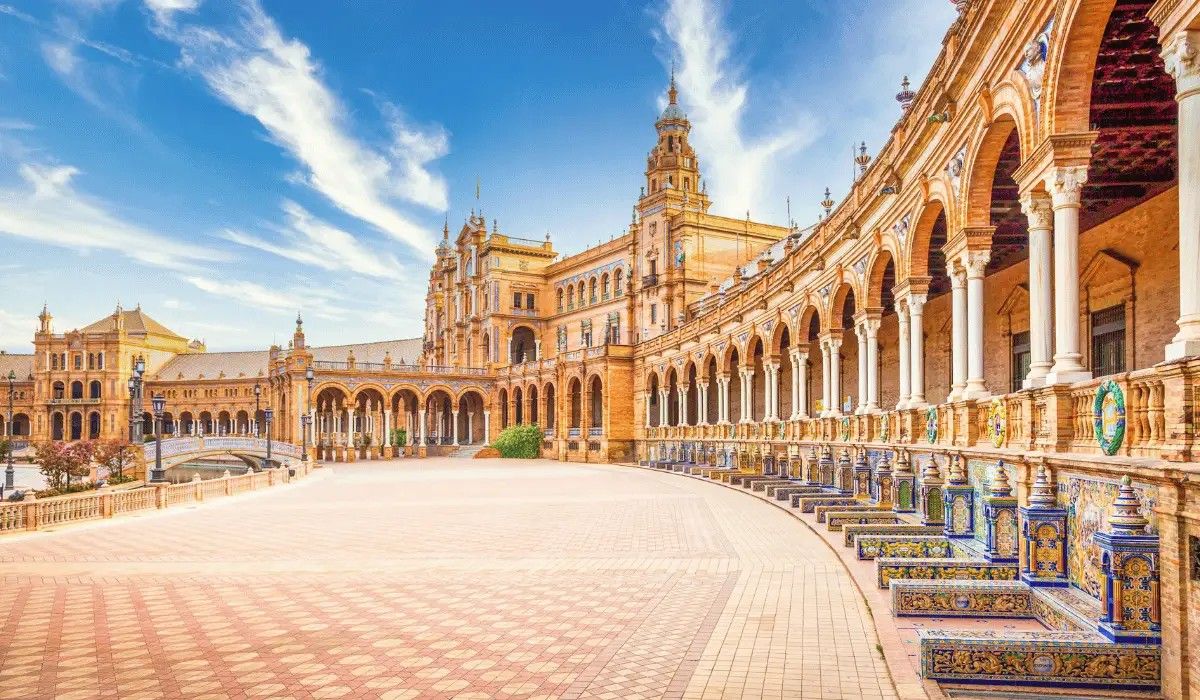
Start day two at Plaza de España, one of the most spectacular public squares in Spain. It was built for the 1929 Ibero-American Exposition and it is pure Sevilla theatre: brick, ceramic tiles, bridges, a canal, towers, and 48 tiled benches representing the Spanish provinces.
Yes, it is touristy. It is also wonderful. Both things can be true.
If you have time, rent one of the small rowboats on the canal. Is it slightly ridiculous? Yes. Is it fun? Also yes.
From Plaza de España, walk straight into María Luisa Park. This is where you slow down. Shaded paths, fountains, hidden corners, benches under trees. Sit for a bit. Doing nothing here counts as sightseeing.
If you are still deciding where to stay, I have a guide to the best neighborhoods to stay in Sevilla, including Santa Cruz, Centro, Alameda, Arenal, and Triana.
Lunch: Cross Into Triana
From the centre, cross the Isabel II Bridge into Triana, the old neighborhood of sailors, ceramic makers, flamenco families, and people with very strong opinions about which side of the river is better.
Triana has a different rhythm from the historic centre. It feels more lived-in, more local, and less polished. That is exactly why I love it.
For lunch, you can look around Calle San Jacinto, the market area, or the streets behind it. Calle Betis has beautiful river views, although it is more touristy. Sometimes a view is worth it, but for the best food, I usually prefer going a little deeper into the neighborhood.
Order pescaíto frito, something grilled, a cold Manzanilla, or a local white wine. Keep it simple.
Afternoon: Ceramics, Local Streets and the River
Triana’s ceramic tradition is one of the most important parts of Sevilla’s visual identity. The tiles you see all over the city, in churches, bars, patios, palaces, and even Plaza de España, are deeply connected to this neighborhood.
Visit the Centro Cerámica Triana if you want to understand the craft, then wander around the nearby streets and workshops. A hand-painted ceramic piece is one of the best souvenirs you can take home from Sevilla. Much better than a plastic flamenco apron, please, I beg you.
I also wrote a guide to what to buy in Sevilla if you want more local ideas.
Evening: Sunset on the Guadalquivir
Walk along the river at sunset. The Torre del Oro, the Cathedral, the bridges, the reflections on the Guadalquivir. This is one of those moments where Sevilla shows off shamelessly, and honestly, fair enough.
For dinner, you can stay around Triana or cross back into Arenal. Keep it relaxed. After two days in Sevilla, you should already understand that the city rewards people who don’t try to do everything at full speed.
Day 3: Modern Sevilla, Hidden Palaces and Sherry
Morning: Las Setas and Alameda de Hércules
Start the day at Las Setas de Sevilla, officially called Metropol Parasol, although nobody here calls it that unless they are reading from a brochure. It is the giant wooden structure in Plaza de la Encarnación, and the rooftop walkway gives you a totally different view of the city.
This is not the romantic postcard Sevilla of orange trees and horse carriages. This is modern Sevilla from above, with rooftops, church towers, apartment buildings, and daily life happening underneath.
From there, walk north to Alameda de Hércules. This long square is one of the most lively areas of the city, especially for younger locals. You will find cafés, bars, independent shops, and a more alternative atmosphere than in Santa Cruz or the Cathedral area.
It is a good reminder that Sevilla is not only a historic city. People actually live here, argue here, fall in love here, complain about the heat here, and spend too much money on coffee here too.
Late Morning: Casa de Pilatos or the Fine Arts Museum
For your last cultural visit, choose between Casa de Pilatos and the Museo de Bellas Artes.
Casa de Pilatos is one of the most beautiful palaces in Sevilla and often gets overlooked because the Alcázar takes all the attention. It is quieter, more intimate, and full of gorgeous courtyards, tiles, gardens, and Renaissance details.
If you prefer painting, go to the Museo de Bellas Artes. It is one of the most important art museums in Spain, especially for Spanish Baroque painting. Murillo, Zurbarán, Valdés Leal. If those names mean something to you, go. If they don’t, you may still enjoy it, but Casa de Pilatos is probably the easier choice.
Afternoon: A Slow Lunch in the Centre
For lunch, find somewhere away from the most obvious tourist streets. Order salmorejo, jamón ibérico, something braised, grilled fish, or a proper seasonal dish if you see one.
This is your last full day, so don’t rush it. A good Sevilla lunch should not feel like a refuelling stop. It should feel like part of the trip.
And if you have been eating tapas for three days and still don’t fully understand what to order, don’t worry. That is normal. Even locals spend years developing strong opinions about which bar does the best ensaladilla, carrillada, espinacas con garbanzos, or montadito. It is a lifelong education, and a delicious one.
Evening: A Sherry Tasting in Sevilla
Before leaving Sevilla, you should taste the wine that belongs to this part of Andalusia.
Sherry is made just one hour south of Sevilla, in the Marco de Jerez, and it is one of the most fascinating and misunderstood wines in the world. It can be bone-dry, salty, nutty, floral, intense, elegant, oxidative, sweet, or somewhere beautifully in between.
The problem is that many visitors try one random glass without context and think they “don’t like sherry”. That is like listening to one bad flamenco song in an airport and deciding music is not for you.
That is why I created The Art of Sherry: A Journey Through the Most Iconic Wines of Southern Spain.
It is a one-hour guided sherry tasting in central Sevilla where we taste five different styles, from dry Fino or Manzanilla to sweet Pedro Ximénez, each paired with Andalusian bites. I guide the tasting as a Certified Sherry Educator, explaining how these wines are made, why they taste the way they do, and how they pair with food.
It is the perfect farewell experience if you want to understand what you have been drinking during your time in Sevilla, or if you want something shorter and more focused than a full tapas tour.
Optional: Flamenco to End the Trip
If sherry is not your thing, or if you want to do both, end the evening with a flamenco performance.
Look for small venues where the emphasis is not only on dancing, but also on cante, the singing. Flamenco is not supposed to be polished entertainment only. At its best, it is raw, emotional, and sometimes slightly uncomfortable in the best way.
If you need help choosing a good flamenco show in Sevilla, send me a message. I am always happy to point guests in the right direction.
Practical Tips for 3 Days in Sevilla
When to Visit Sevilla
Spring and autumn are the best seasons. March, April, May, October, and November are especially beautiful.
Summer can be very hot, especially in July and August, when temperatures can go above 40°C. If you visit in summer, plan monuments early, eat a long lunch, rest in the afternoon, and go out again in the evening.
Winter is mild, quieter, and very underrated. You will have fewer crowds and a more local feel.
Getting Around
Sevilla’s historic centre is very walkable. Most of this itinerary happens within a 20-minute walk, although comfortable shoes are essential. The old streets are beautiful, but they were not designed with modern ankles in mind.
Taxis are easy to find and useful if it is very hot or if you are moving between neighborhoods at night.
Cash or Card?
Most places accept cards, but some very traditional bars still prefer cash, and occasionally card machines “mysteriously” stop working. Carrying €50 or €60 in cash is always a good idea.
Reservations
Book the Cathedral, the Alcázar, and flamenco shows in advance.
For tapas bars, walking in is still common, especially in more traditional places. But if you are visiting during a busy season, weekends, or holidays, planning ahead helps.
For my Sevilla Tapas Tour and the sherry tasting, I always recommend booking in advance because I keep the groups small. The experience is much better that way, and the tiny local bars I work with are not made for big crowds.
Pace Yourself
The biggest mistake people make in Sevilla is trying to treat it like a checklist.
Cathedral, Alcázar, Plaza de España, tapas, flamenco, Triana, Setas, museums, shopping, sunset, dinner. Technically possible. Emotionally violent.
Leave space. Walk slowly. Sit down. Have a coffee. Go for one more tapa. Rest in the afternoon. Sevilla is not a city you conquer. It is a city you let happen to you.
Final Thoughts: How to Make the Most of 3 Days in Sevilla
Three days in Sevilla gives you enough time to see the monuments, explore the neighborhoods, understand the rhythm of the city, and eat very, very well.
My advice is simple: book the big monuments in advance, avoid rushing, and make food and wine part of the experience, not just something you squeeze in between attractions.
If you want to discover the city through its tapas bars, local wines, traditional dishes, sherry, and stories behind the food, you can join my Sevilla Tapas Tour.
And if you want a shorter, deeper introduction to the most iconic wine of southern Spain, book The Art of Sherry, my guided sherry tasting in Sevilla.
Either way, come hungry. Sevilla makes much more sense that way.
The Andalusian Table
Once a month, Elio sends his Andalusian food, wine and travel recommendations — the bars he's eating at, the sherries worth seeking out, and where to go next. No spam, unsubscribe anytime.
Sent via Beehiiv. By subscribing you agree to our privacy policy.