Sherry for Beginners: The Main Styles Explained by a Certified Educator
A complete beginner's guide to Sherry wine from a Certified Sherry Educator in Sevilla. Learn the main styles, how they are made, and what to pair them with.

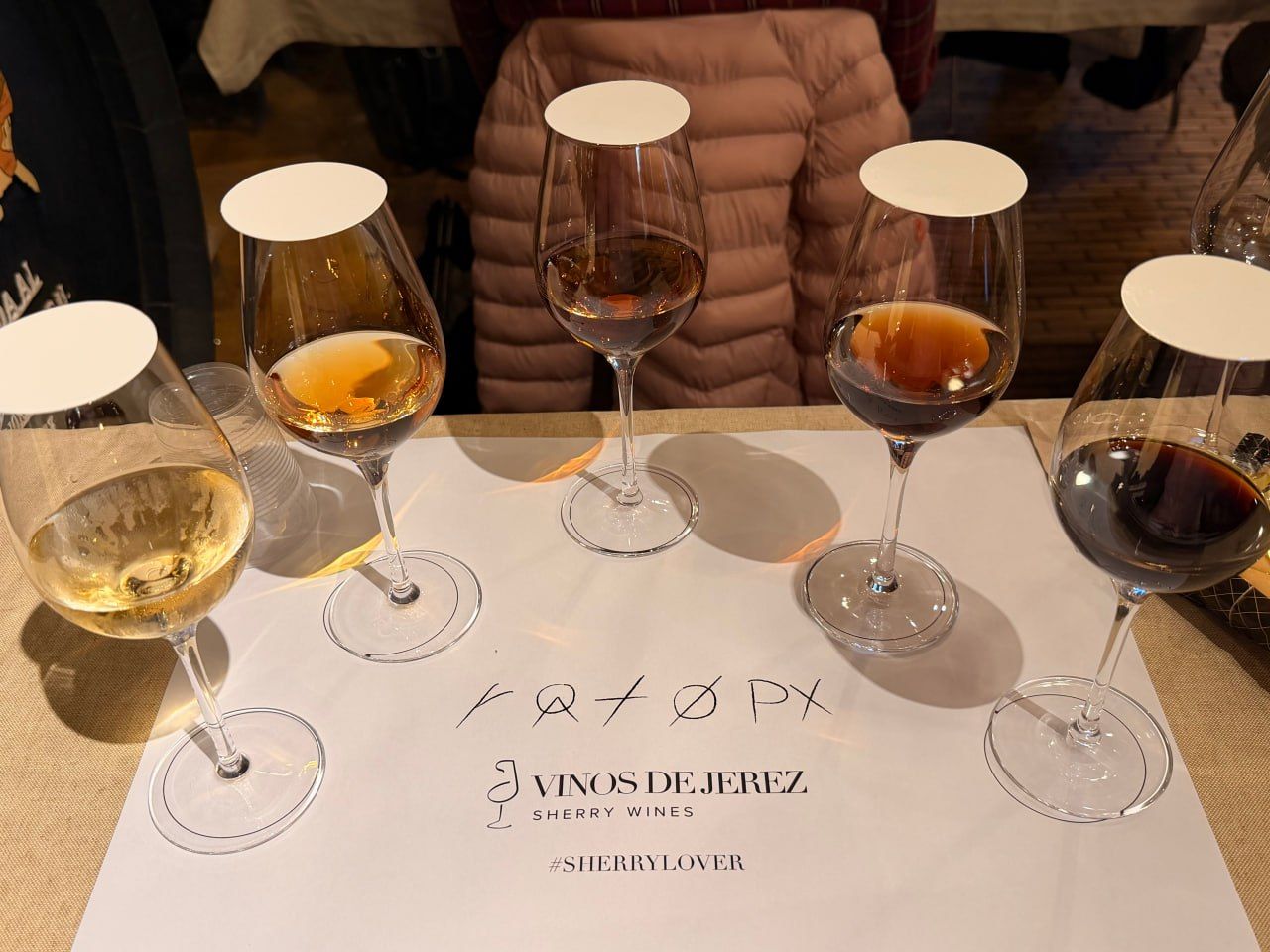
Sherry is probably the most misunderstood wine in the world.
For many people outside Andalusia, the word “sherry” brings to mind a sticky bottle at the back of a grandmother’s cupboard. But here in southern Spain, Sherry is something completely different.
It is the wine we drink before lunch under the orange trees. It is the wine our grandparents poured on summer days by the beach, alongside seafood and jamón ibérico. And it is one of the most complex, versatile, and food-friendly wines on the planet.
I’m a Certified Sherry Educator and I’ve also passed the WSET Level 3 Award in Wines. But more than any of that, I grew up with these wines around me. Let me show you why Sherry deserves a place in your glass.
Quick Answer: The Main Families of Sherry
Sherry can seem confusing at first, but the easiest way to understand it is to divide it into three main families.
1. Dry Sherries
Known in Spanish as Vinos Generosos.
These are dry wines, mostly made from the Palomino grape. They can be light and salty, rich and nutty, or deep and oxidative.
| Style | Sweetness | Main flavours |
|---|---|---|
| Fino | Bone dry | Almond, fresh bread, saline notes |
| Manzanilla | Bone dry | Lighter, coastal, very salty |
| Amontillado | Dry | Hazelnut, dried herbs, amber colour |
| Oloroso | Usually dry | Walnut, leather, dried fruit, polished wood |
| Palo Cortado | Dry | Elegant, complex, somewhere between Amontillado and Oloroso |
2. Sweetened or Blended Sherries
Known in Spanish as Vinos Generosos de Licor.
These wines are made by blending dry Sherry with naturally sweet wines or concentrated grape must. They are usually softer, rounder, and sweeter.
| Style | General profile |
|---|---|
| Pale Cream | Light, delicate, slightly sweet |
| Medium | Amber, nutty, with noticeable sweetness |
| Cream | Darker, richer, sweet and smooth |
3. Naturally Sweet Sherries
Known in Spanish as Vinos Dulces Naturales.
These are naturally sweet wines, usually made from Pedro Ximénez or Moscatel grapes. The grapes are often dried in the sun after harvest (a process known as asoleo) to concentrate their sugars.
| Style | Main flavours |
|---|---|
| Pedro Ximénez (PX) | Raisins, figs, dates, coffee, molasses |
| Moscatel | Orange blossom, honey, raisins, citrus peel |
All these wines come from the Sherry region in southern Andalusia, historically centered around Jerez de la Frontera, El Puerto de Santa María, and Sanlúcar de Barrameda.
Today, the official production area includes additional municipalities, but the soul of Sherry is still deeply tied to this historic triangle.
The wines are made mostly from just three grape varieties: Palomino, Pedro Ximénez, and Moscatel. But the results could not be more different.
What Makes Sherry Different from Other Wines?
Sherry is a fortified wine, which means that an amount of grape spirit is added to raise the alcohol level. But that is only the beginning of the story.
Two things make Sherry truly special: the flor and the solera system.
1. The Flor
After fermentation, certain Sherry wines develop a layer of yeast called flor. This flor floats on top of the wine inside the barrel and protects it from oxygen.
This is what gives Fino and Manzanilla their unmistakable salty, savory, almond-like character.
Few wine regions in the world have built an entire identity around biological aging in such a distinctive way. In Sherry, flor is not just a technical detail. It is the soul of the wine.
2. The Solera System
Sherry is usually not the wine of a single year. It is a blend of many years, aged in a sequence of barrels called a solera system.
The oldest barrels, known as the actual solera, are usually at the bottom. Above them are younger tiers called criaderas. When wine is bottled, it is drawn from the bottom row. That row is then topped up with wine from the row above, and so on.
The result is that every bottle contains a fraction of wine from different years, sometimes going back decades.
Elio’s Tip: When you taste a Sherry, you are not tasting one year. You are tasting the memory of a winery.
The Main Styles of Sherry, Explained
1. Fino — The Everyday Joy
Fino is the perfect starting point for many people.
It is pale, bone dry, fresh, and aged entirely under flor in Jerez or El Puerto de Santa María. Because the flor protects the wine from oxygen, Fino keeps a bright, fresh character, with notes of green almond, fresh bread dough, and a finish that makes your mouth water.
It is one of the best aperitif wines in the world.
- Serve: Cold, around 8°C, in a proper white wine glass.
- Pair with: Jamón ibérico, salted almonds, olives, anchovies, fried fish.
- Drink within: A few weeks after opening. Fino is a fresh wine and oxidises quickly once the bottle is open.
2. Manzanilla — The Coastal Cousin
Manzanilla is made in the same way as Fino, but it can only come from Sanlúcar de Barrameda, the coastal town at the mouth of the Guadalquivir River.
The climate in Sanlúcar is more humid and influenced by the Atlantic Ocean. This helps the flor stay thicker and more stable throughout the year. The entire aging phase (which is exclusively biological) must take place in Sanlúcar de Barrameda.
There are two traditional styles of Manzanilla: fina and pasada (aged around 7 years).
The result is a Sherry that feels lighter, fresher, saltier, and more bracing than Fino. It is crisp, delicate, and incredibly refreshing.
- Serve: Cold, around 7-8°C.
- Pair with: Pescaíto frito, prawns, oysters, sushi, gazpacho, olives, patatas aliñás, and anything that tastes like the sea.
Elio’s Tip: If a sevillano hands you a chilled Manzanilla on a hot July evening, accept it. It might be the most refreshing drink in Spain.
3. Amontillado — The Storyteller
Amontillado starts its life like a Fino, ageing under flor. But at some point, the flor disappears, either naturally or because the wine is refortified.
From that moment, the wine begins a second life in contact with oxygen.
This changes everything. The colour deepens to amber, and the aromas move from fresh almond and bread dough to toasted hazelnut, dried herbs, orange peel, and old wood.
Amontillado is dry, but its texture can feel almost creamy. It is elegant, complex, and a perfect gateway for whisky lovers: nutty, intense, and layered, but with far less alcohol than whisky.
- Serve: Slightly cooler than room temperature, around 12-14°C.
- Pair with: Mushrooms, mature hard cheeses, roast chicken, almond-based stews, white meats, artichokes.
4. Oloroso — The Bold One
Oloroso is fortified to a higher alcohol level from the beginning, which prevents flor from forming.
This means the wine ages in contact with oxygen from day one. Over time, it darkens to mahogany and develops deep, savory aromas of walnut, leather, polished wood, spice, and dried fruit.
Most Olorosos are dry, despite their rich and almost sweet-smelling aromas. This is one of the great surprises of Sherry: a wine can smell sweet, feel generous, and still be completely dry.
- Serve: Around 14-16°C.
- Pair with: Oxtail stew, game, Iberian pork, hard sheep’s cheese, mushrooms, and rich meat dishes.
5. Palo Cortado — The Mysterious One
Palo Cortado is one of the most fascinating styles of Sherry.
It is often described as having the elegance and aromatic delicacy of an Amontillado, with the body and structure of an Oloroso. Historically, it was considered mysterious because it appeared when a wine seemed to start in one direction but developed in another.
Today, its production is much better understood, but the romance remains.
A good Palo Cortado can be incredibly complex: dry, elegant, nutty, slightly spicy, and very long on the palate.
- Serve: Around 12-14°C.
- Pair with: Jamón ibérico, aged cheeses, mushroom dishes, Iberian pork, almonds, and slow-cooked meats.
6. Pedro Ximénez — The Sweet Soul
Pedro Ximénez, often called PX, is the sweetest and most intense style of Sherry.
It is made from Pedro Ximénez grapes that are laid out in the sun after harvest, a process known as asoleo. This concentrates the sugars and turns the grapes almost into raisins before they are pressed.
The resulting wine is dark, dense, and intensely sweet (more than 220 g/L of sugar), with flavors of raisins, figs, dates, molasses, coffee, and dark chocolate.
PX is not a wine you drink quickly. It is a dessert in itself.
- Serve: Around 12-14°C.
- Pair with: Vanilla ice cream, blue cheese, dark chocolate desserts, or simply a quiet moment after lunch.
Elio’s Tip: Pour a spoonful of PX over good vanilla ice cream. Thank me later.
How to Start Drinking Sherry
If you are completely new to Sherry, this is the path I recommend:
- Start with a Fino or Manzanilla with food. Salted almonds, olives, and jamón ibérico are the easiest entry point.
- Then try an Amontillado, to understand how the wine changes when the flor disappears and oxygen becomes part of the story.
- Move on to an Oloroso, to feel what long oxidative ageing does to a wine.
- If you want something truly special, try a Palo Cortado.
- Finish with a Pedro Ximénez as dessert, ideally poured over good vanilla ice cream.
You do not need expensive bottles to begin. Many extraordinary Sherries cost under €15-25. The category remains one of the most undervalued in the wine world.
Why Sherry Is One of the Best Food Wines in the World
There is no other wine category quite like Sherry when it comes to food.
The bone-dry styles work beautifully with seafood, cured meats, olives, almonds, and fried fish. The mid-styles, like Amontillado and Palo Cortado, are wonderful with mushrooms, white meat, aged cheeses, artichokes, and savoury stews. The big oxidative wines, like Oloroso, can stand up to rich meat dishes, game, and slow-cooked sauces. And PX takes care of dessert.
In Andalusia, we like to say that Sherry pairs with almost everything.
And honestly, we are not exaggerating much.
Tasting Sherry in Sevilla
If you would like to understand Sherry properly, the best way is to taste it with the bottles in front of you.
I host a guided Sherry tasting in Sevilla called The Art of Sherry. We taste five different Sherries, from bone-dry Fino through to sweet Pedro Ximénez, each paired with Andalusian bites.
During the tasting, I walk you through the history, the flor, the solera system, and how to understand each style in a simple, enjoyable way.
It is a one-hour experience designed for beginners, curious wine lovers, and anyone who wants to discover one of the most fascinating wine regions in the world.
You can read more about The Art of Sherry tasting experience or book directly if you would like to join us in Sevilla.
Sherry is not your grandmother’s dusty bottle. It is one of the most exciting, complex, and undervalued wine categories in the world.
And the easiest place to fall in love with it is here in Andalusia, where it has been made, poured, shared, and loved for centuries.
The Andalusian Table
Once a month, Elio sends his Andalusian food, wine and travel recommendations — the bars he's eating at, the sherries worth seeking out, and where to go next. No spam, unsubscribe anytime.
Sent via Beehiiv. By subscribing you agree to our privacy policy.